
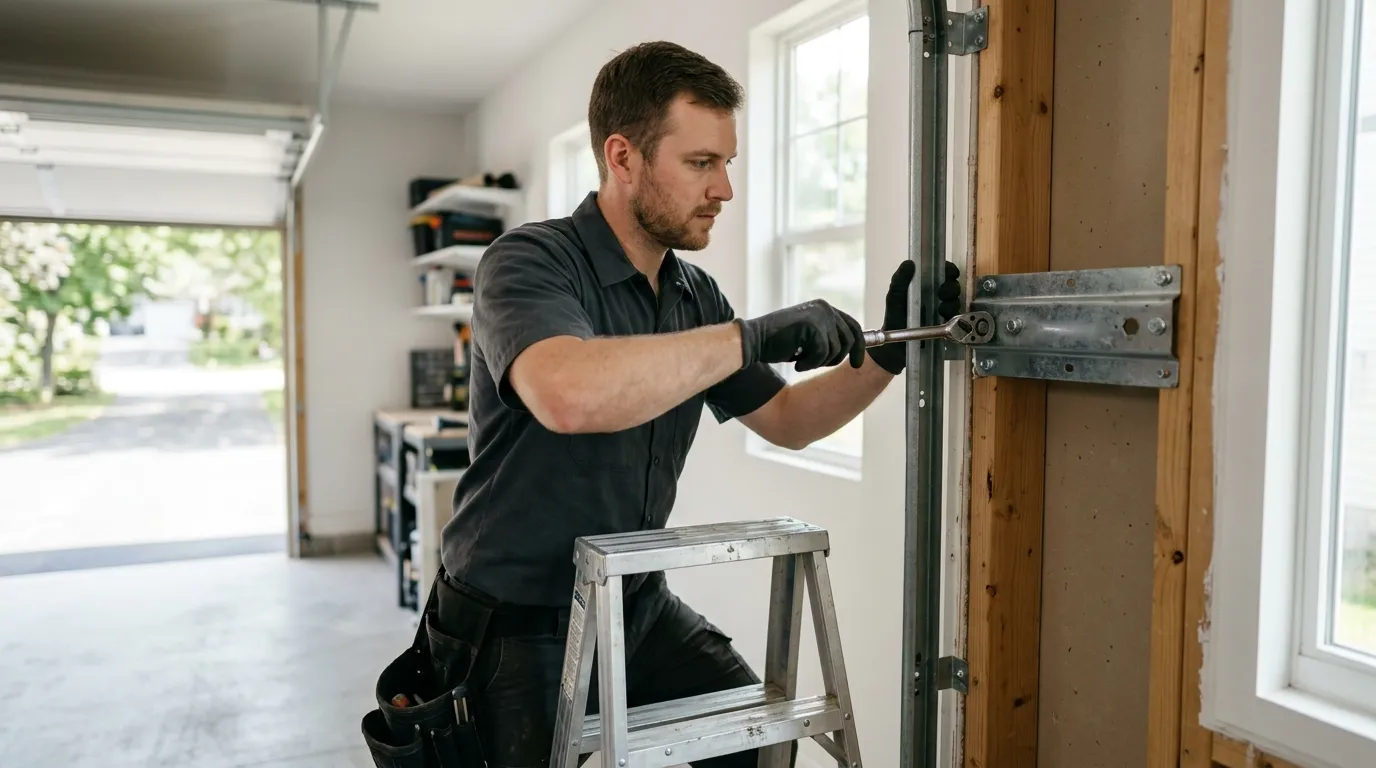
Garage Door Repair in Grantville
Garage Door Repair for Grantville Homes
Grantville homes mostly date to around 2000, not the 1970s stock common elsewhere in our service area. Here's how that changes the repair call, and what we bring from LaGrange.
- Licensed & Insured
- Same-Area Service Calls
- Upfront Pricing
What Happens When You Call
-
1
Call or Request a Quote
Tell us what the door is doing and roughly how old the house is - that alone points us toward the likely part before a truck leaves.
-
2
On-Site Diagnosis
A tech checks the spring, cables, tracks, and opener in person and tells you plainly what is actually wrong.
-
3
Straight Price, No Surprises
You get a number before any work starts. It covers parts and labor, nothing added after the fact.
-
4
Fixed the Same Visit
Most repairs are done in one trip. If a part needs sourcing, we tell you that upfront instead of guessing.
Getting It Booked In
We're based in LaGrange, about 19 miles out, which puts Grantville at the far edge of the ground we cover - right alongside Greenville and Franklin on the mileage sheet. That distance is real, so when you call, tell us what the door is doing (won't open, stuck halfway, loud bang, opener light blinking) so the truck comes loaded with the right spring size and the right opener board instead of a generic kit.
We don't run a branch or a drop box in Grantville. Every job here is a trip from LaGrange, which means we ask a few more questions on the phone than a shop with a local yard would need to. It's a trade-off: less guessing on-site, more precision before we ever pull out of the lot.
Most calls we get from this side of the county are for openers acting erratic or a spring that let go without warning - both common on houses built in the last twenty-five years rather than the older torsion setups you'll find closer to LaGrange proper.
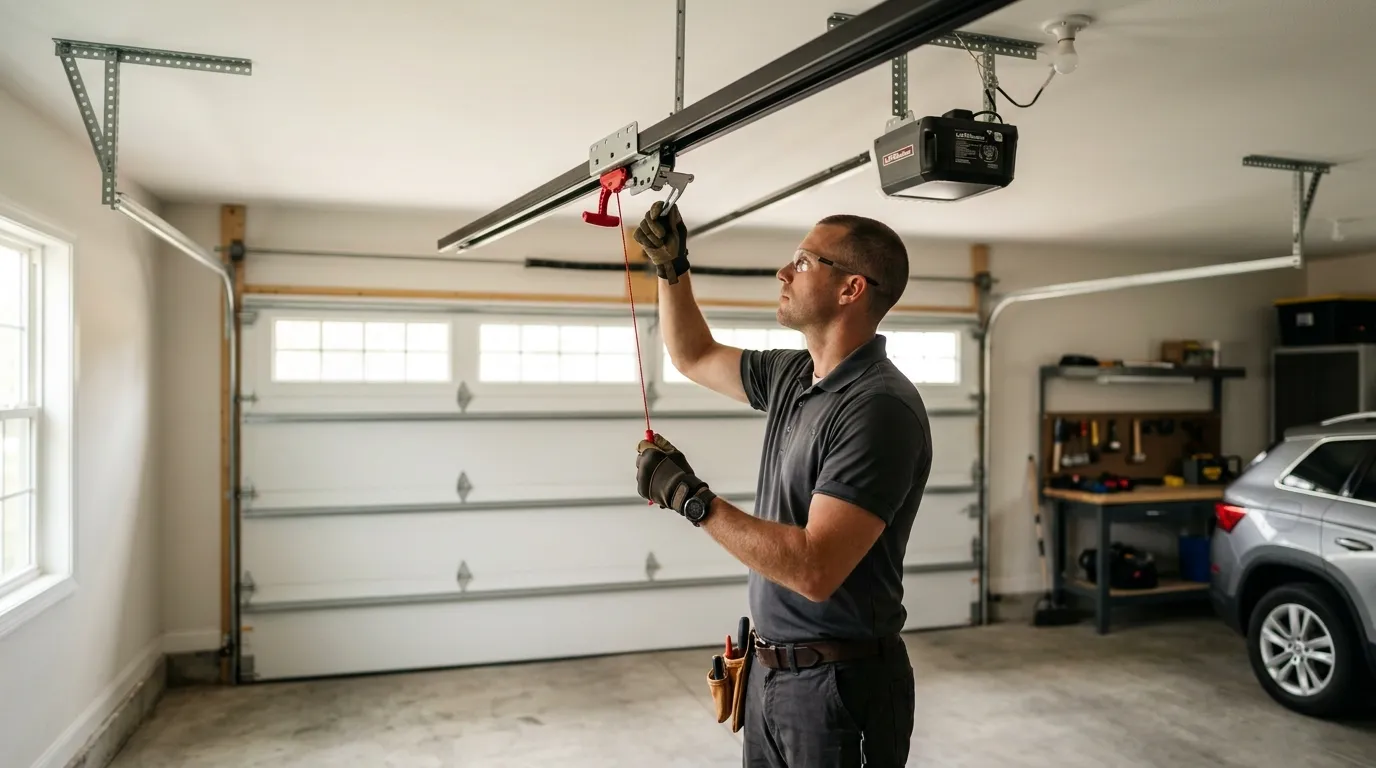
Why This Fails Locally
Grantville's housing stock is noticeably newer than the rest of the LaGrange Garage Door Pros coverage area. Across the six areas we serve, the median build year sits around 1973, with plenty of houses from the 1960s and 70s still running original hardware. Grantville skews to roughly 2000 - a full generation later.
That gap changes what actually breaks. A 1973 door is more likely to have side-mounted torsion springs, steel tracks that have been re-shimmed a few times, and an opener that's been swapped at least once. A 2000-era door in Grantville is more likely to still have its factory opener logic board, a center-mounted torsion spring rated for a lighter panel, and plastic idler pulleys that were standard for that build era and are now the first thing to crack.
We see fewer full hardware replacements out here and more electronics failures - circuit boards, wall stations, sensor eyes - because the mechanical parts on a 20-to-25-year-old door haven't had time to fatigue the way 50-year-old steel has. The climate here is mild with occasional freeze, so cold isn't stressing these newer components the way it can strain older, drier lubrication in the oldest stock.
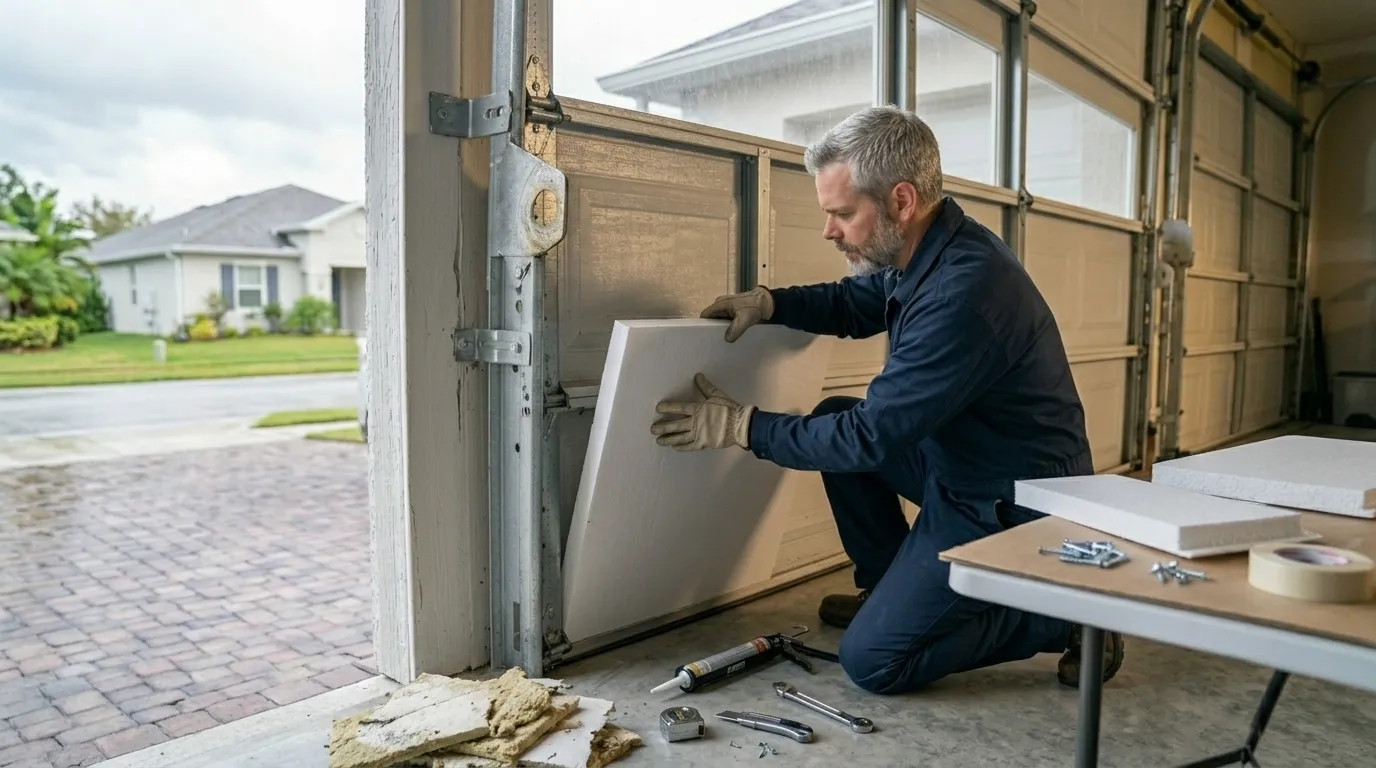
The DIY Question
A cracked plastic idler pulley or a misaligned safety sensor on a newer door is often something a handy homeowner can spot and sometimes fix - the parts are common and the failure is usually visible once you know where to look.
What we don't recommend touching yourself is anything involving the torsion spring under tension, even on a lighter, newer-era door. The spring on a 2000-built garage door is still storing enough force to break a bone or worse if the winding cone slips, and a center-mounted single spring on a lighter panel doesn't behave the same way a doubled side-mount system does. If you're not sure which kind you have, that's reason enough to call rather than guess.
One honest limit: if your opener logic board is the issue and the model's been discontinued, we may need to source a replacement board rather than have one on the truck, which can mean a short wait. We'll tell you that up front rather than promise same-visit parts we don't have in hand.
How We Fix It
On a Grantville call, the first thing we check is the opener - logic board, wall station wiring, and the photo-eye sensors, since that's where most of the newer-build failures show up. If the door won't respond at all, we test the board before we touch anything mechanical, because replacing a spring won't fix a dead circuit.
If it is mechanical, we're usually dealing with a single center-mounted torsion spring rated for a lighter panel than the older side-mount doubles we work on elsewhere in the service area. We match the spring wire size and wind to the door's actual weight rather than swap in whatever's closest on the shelf - a mismatched spring on a newer door either won't lift the door fully or will over-stress the opener trying to compensate.
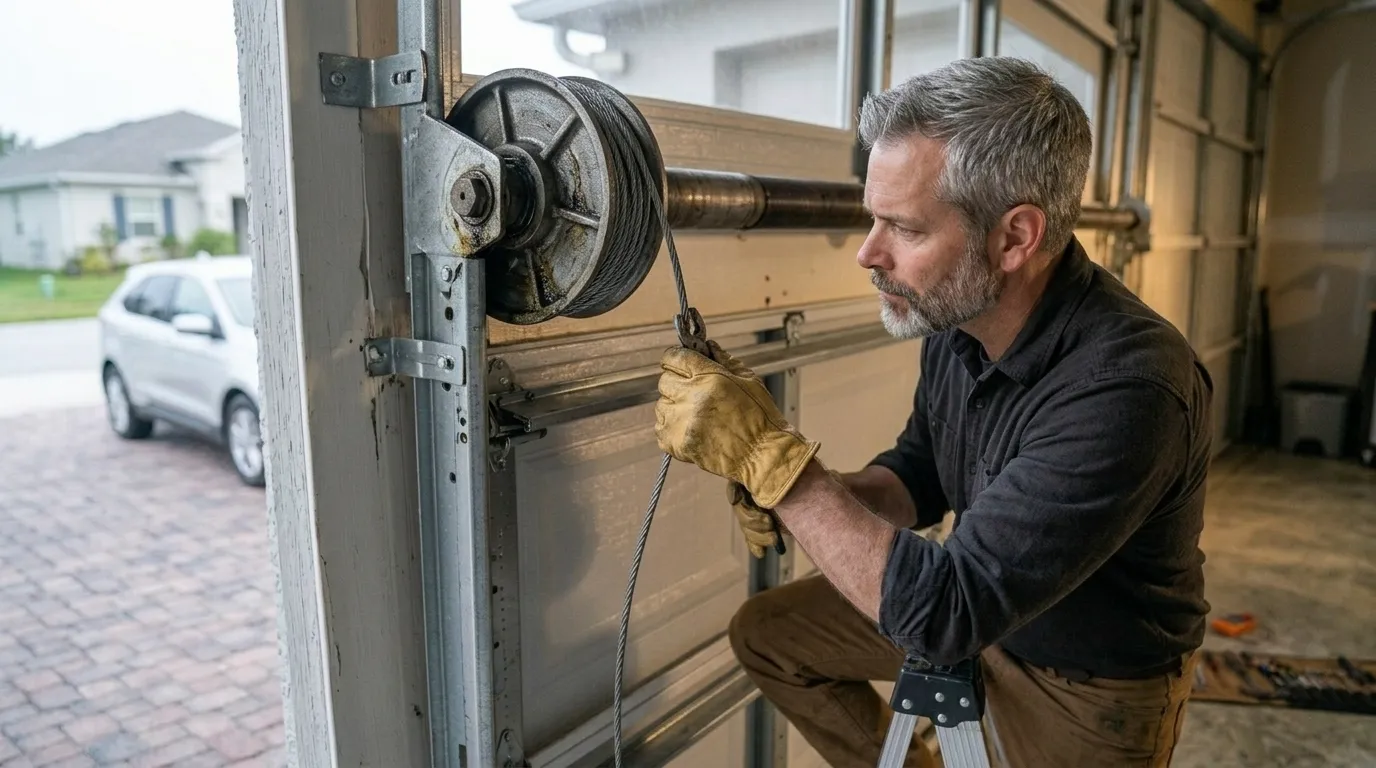
We also check the plastic rollers and idler pulleys standard to this build era, since those are the first parts to go brittle and crack, especially where the door's had a decade or two of daily use. Track alignment gets checked last, since it's rarely the root cause on a door this age unless something's been hit.
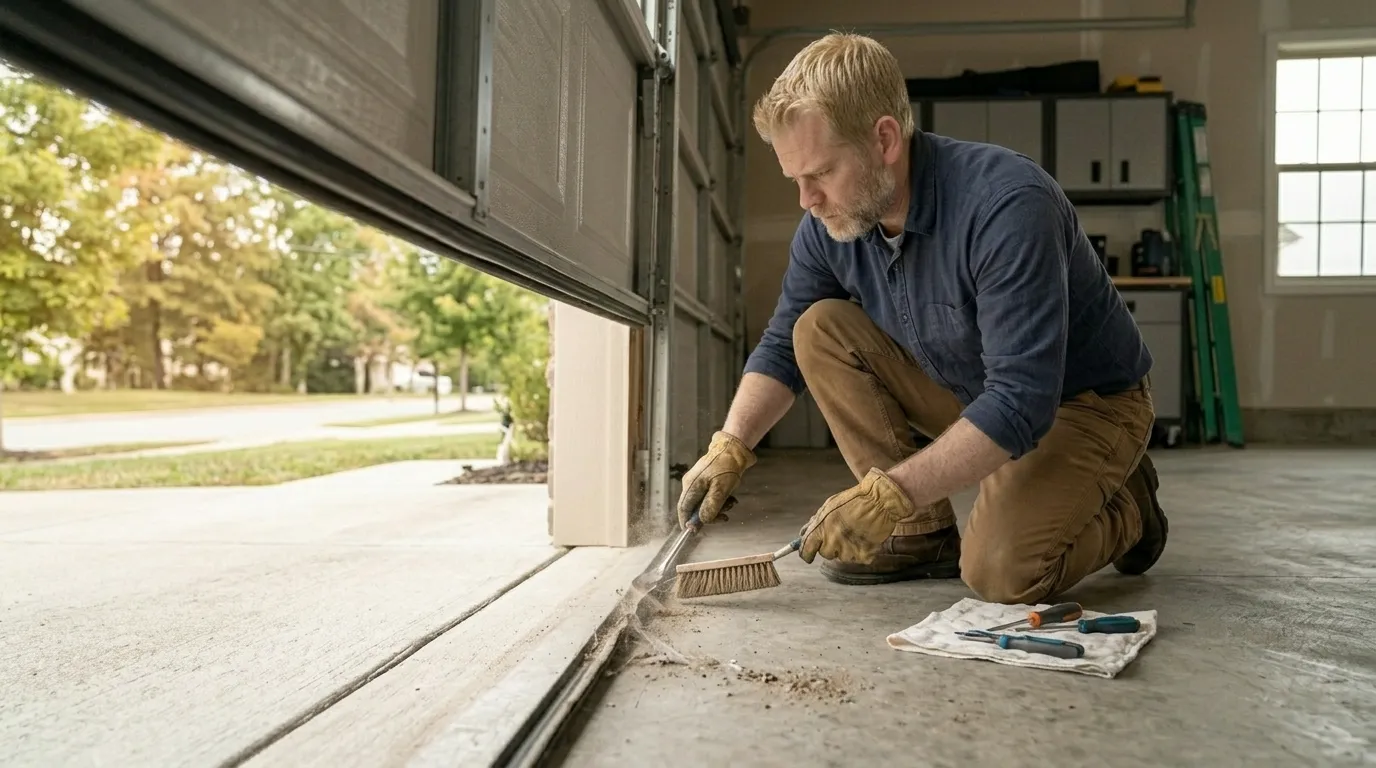
Stocked Parts
We carry the parts that actually fail on doors from this build era: standard photo-eye sensor pairs, common wall station units, plastic roller and idler pulley sets, and torsion springs sized for lighter, newer-era panels rather than only the heavier side-mount doubles common on older houses.
What we don't keep on the truck is every discontinued opener logic board. If your opener is an older model from right around that 2000 build wave and the board's no longer made, we may need a day or two to source one rather than fix it on the first visit. We'd rather tell you that than leave with a part that isn't the right fit.
Because the trip out from LaGrange is close to 19 miles, we try to diagnose as much as possible over the phone before the truck rolls, so the parts on board match the actual job - center-mounted spring, board, or sensor - rather than a guess based on age alone.
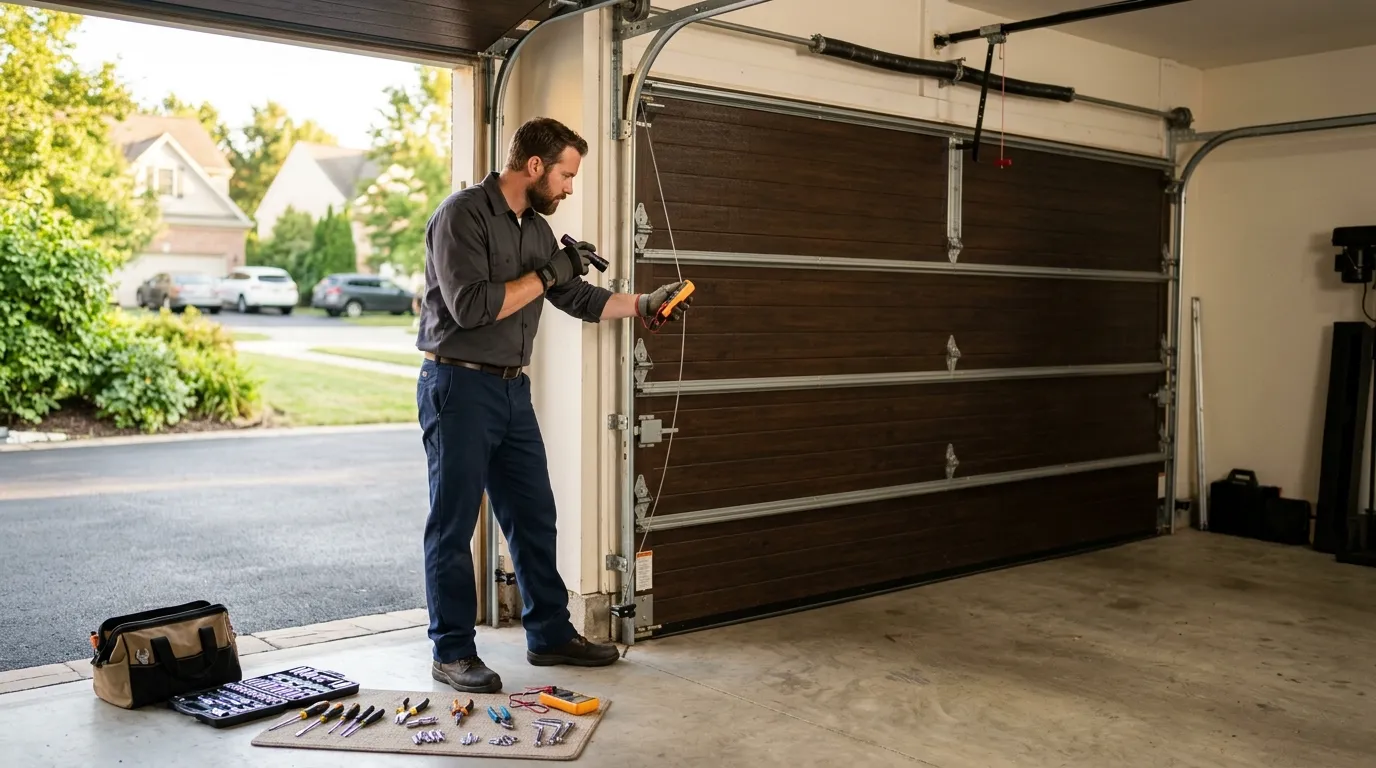
Talk to a Grantville Technician First
Describe what the door is doing and get a straight answer on what it likely needs.
Other Garage Door Services in Grantville
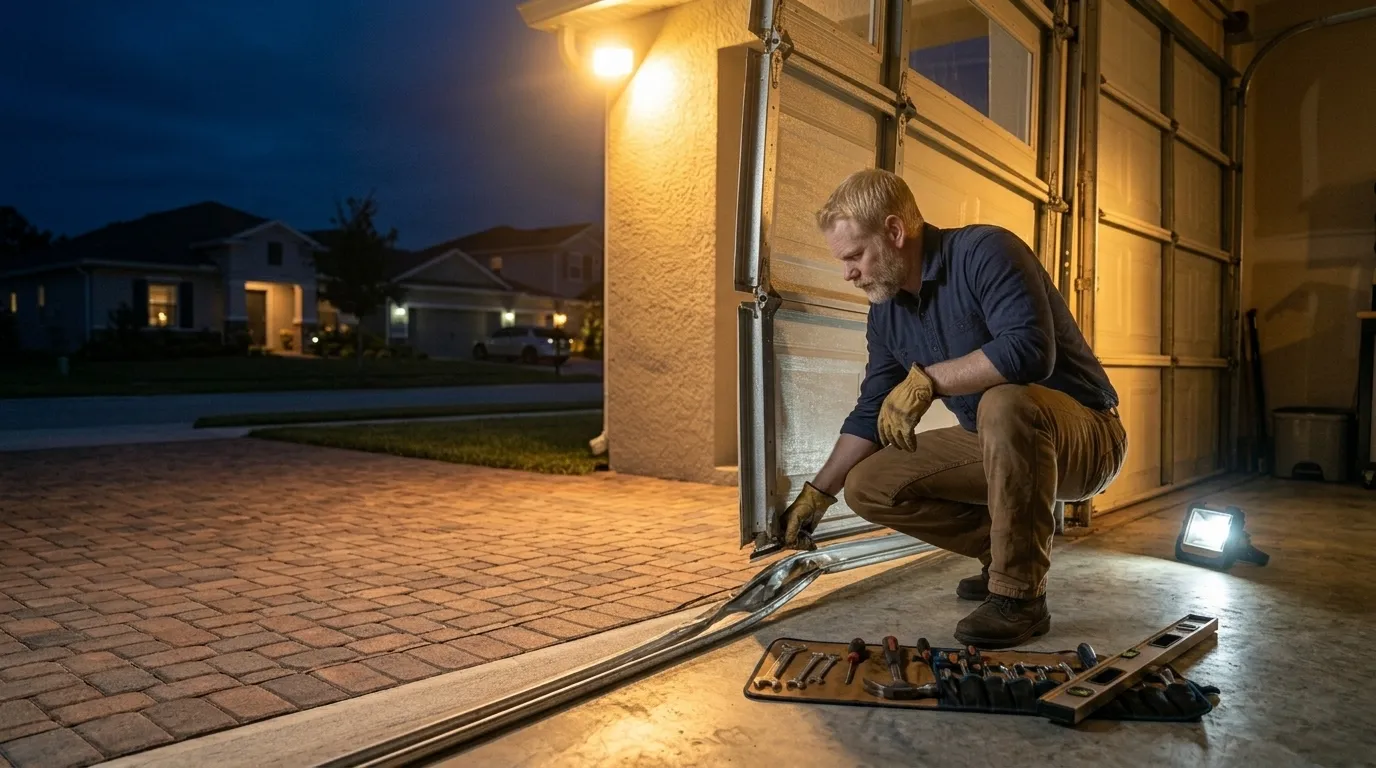
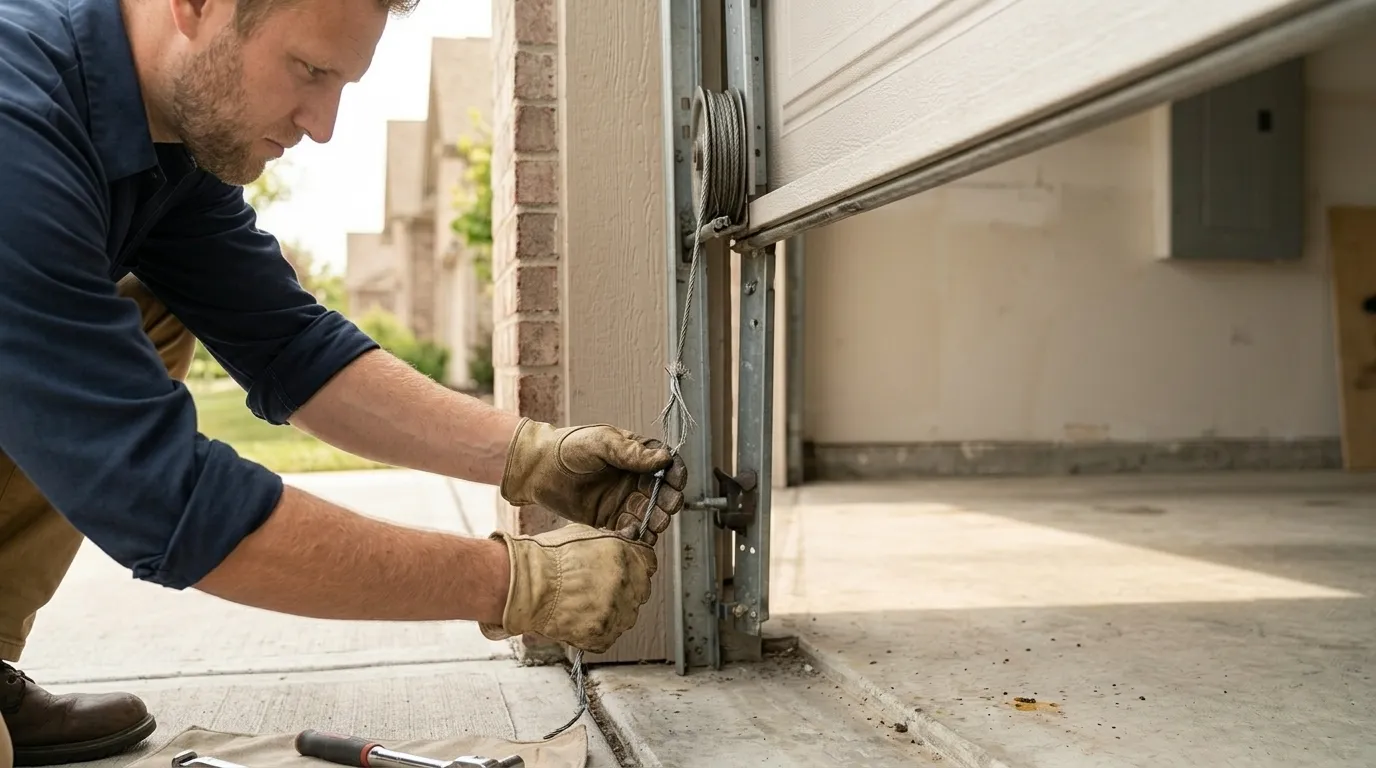
Recent Work in Grantville
A look at jobs our crew has been on nearby.
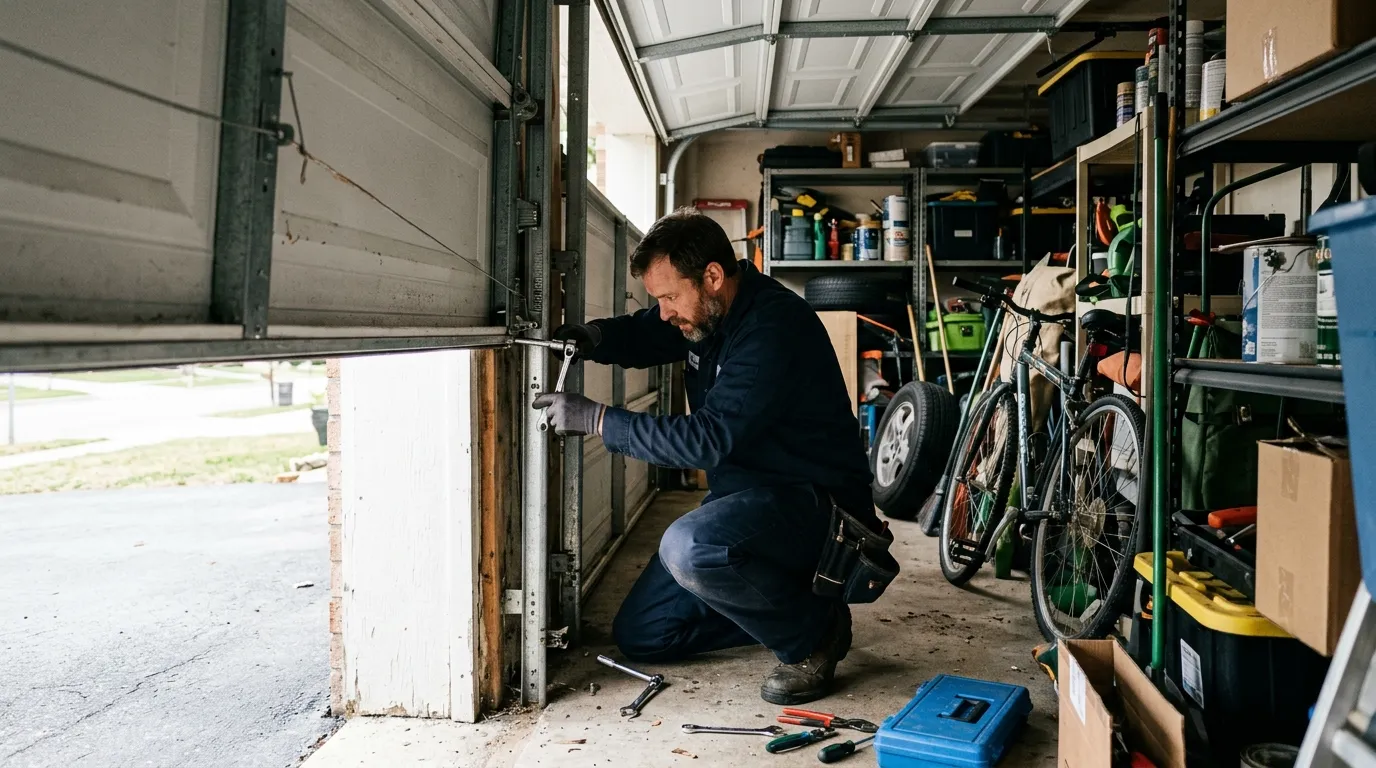
Why Grantville Calls Us
Frequently Asked Questions
Why does my garage door opener keep failing when the door itself seems fine?
Houses in this area were mostly built around 2000, which means openers are more likely factory logic boards from that era rather than units that have already been replaced once, as is common on older 1970s-era doors elsewhere in our coverage area. Boards from that generation are now old enough to start failing on their own.
Do you have a branch in Grantville?
No. We're based in LaGrange, about 19 miles out, and every job here is a trip from there. We don't keep a local drop box or yard in Grantville, so we ask more questions on the phone to load the right parts before the truck leaves.
Is my spring the same type as an older house's spring?
Not necessarily. Grantville's housing stock is newer, built around 2000 versus the roughly 1973 median across the wider area, and doors from that era more often run a single center-mounted torsion spring rated for a lighter panel rather than the doubled side-mount setup common on 1960s and 70s houses.
Can I fix a cracked idler pulley myself?
Often, yes. It's a visible failure and a common part on doors from this build era, and it doesn't involve spring tension. Just make sure the door is fully down and the opener unplugged before you work on the track assembly.
Need Garage Door Repair in Grantville?
Call now for straight answers on cost and timing.